
Do Not Hinder Them
You might not accomplish anything except welcoming Jesus today

When Jesus tells you He will meet you somewhere, pay attention.
“Whoever welcomes one of these little children in my name, welcomes me,” he says in the Gospels (cf. Matthew 18:5, Mark 9:37, and Luke 9:48). And later in the Gospel of Matthew, Jesus surprises by listeners by thanking them for the times when “I was hungry and you gave me food, I was thirsty and you gave me drink, I was a stranger and you welcomed me” (v 35). Confused, his listeners ask when they did these things. “And the King will answer them, ‘Truly, I say to you, as you did it to one of the least of these my brothers and sisters you did it to me” (v 40).
Little children and “the least of these” have quite a bit in common, 2000 years later. They hunger, they thirst, they wander where they don’t belong. They end up in prison. They interrupt important meetings (Matthew 19:14). They are strangers to the ways of power and privilege. And they are our best guides when we want to grow in hospitality.
In one of my first Substack posts, I told the story of Michael — a homeless man I met in my early 20s, who confronted me with the fact that my life was not strong enough to bear the weight of his needs. The point of that piece was not that hospitality is impossible, but rather that we need more robust households and churches if we are to joyfully and faithfully obey Christ’s call to welcome the stranger. Twenty years later, I’m still trying to build a life capable of welcoming Michael: a life in which I’m not alone, a community with the capacity to care for trauma, create safety, and offer membership that shapes everything from food to rest to finances.
Children confront the structures of our lives in similar ways. They are righteously demanding from their first cry, hungry thirsty cold and bewildered. As babies they care nothing for our ambitions or agendas. For mothers, especially, welcoming these tiny strangers can be both agonizing and blissful, largely dependent on how much support we have from others during those intense early years.
Whether you are single or married, childless or a parent, young or old, the way your household can (or cannot) welcome children is your best metric for how you might welcome another needy stranger: a foreigner, a lonely neighbor, a homeless mom, a lost boy or troubled girl.
Imagine a 2-year-old exploring your house (or, if you are like me, just watch your toddler follow her chaotic bliss through every room). Does every shelf hold breakable treasures, so that you must cry “hands off!”? Is there somewhere set aside for her to nap? Can you continue your daily work with her nearby? Do you scroll your phone while you are with her, or do you have stories to tell and books to share? Are you doing some kind of work you can invite her to join and learn? Is there another person with you to keep watch and company? If the house begins to feel close, is there an outdoor space you can enjoy together? And do you have plenty of snacks?
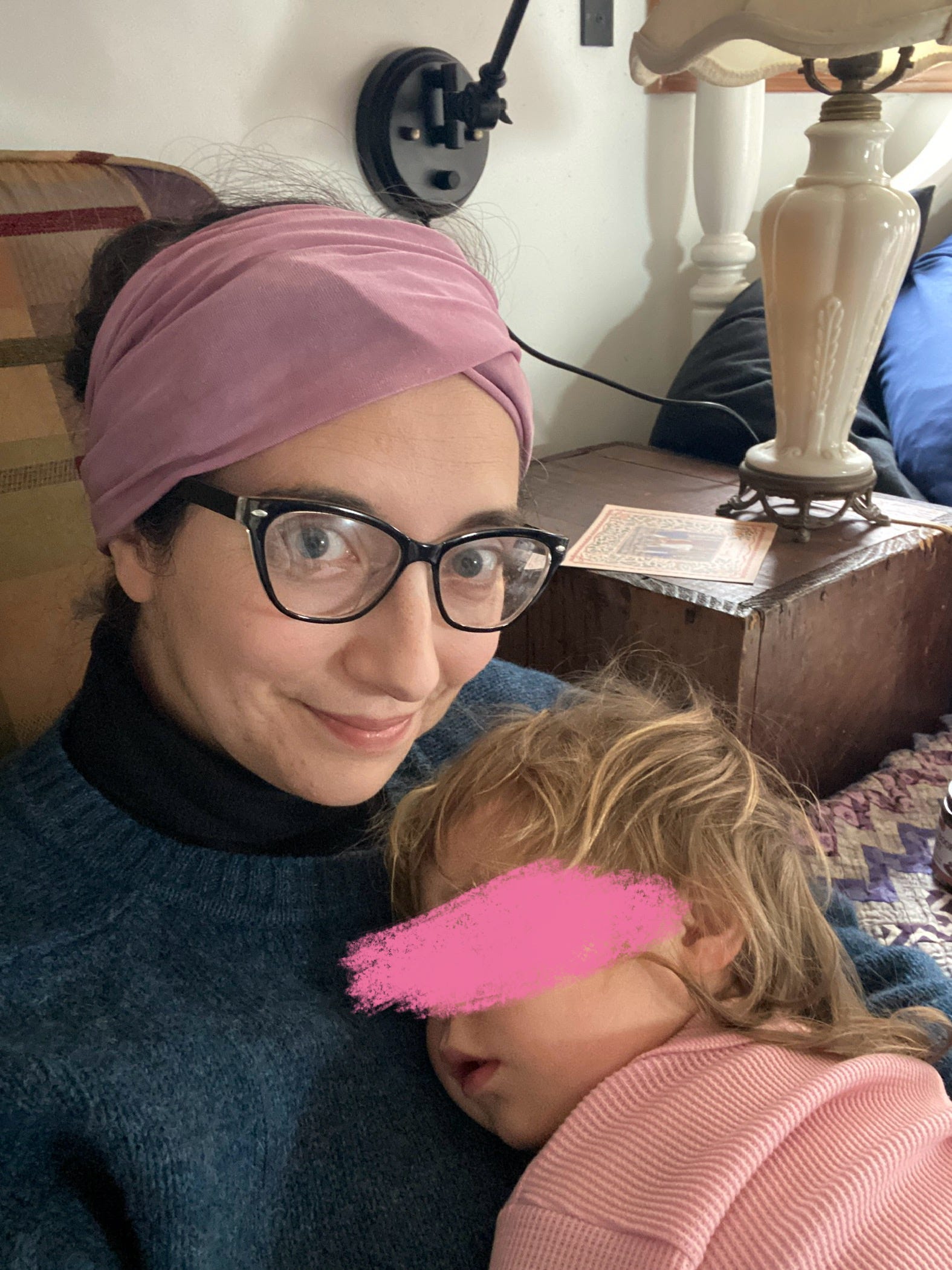
The structural changes children brought to my life has made my household much more open to hospitality than it would be otherwise. We scrimp and save so that I can be home during the week with our young children, which means I’m also home when my widowed neighbor needs some company mid-afternoon. The children are always hungry, so it’s no trouble to add a plate for the girl down the street. And while there are some strangers I cannot welcome into the house unless more adults join us, I have a large garden where the children and I can encounter those deeper needs.
When we think about the jobs we take, the way we arrange our rooms, who lives in our house with us, how we source our food — all these choices have the potential to include or exclude others.
These structural choices do come at a cost, of course. When I pay our bills each month I can’t help but think about what our savings account might look like if I returned to work full-time. And although I rise early to write, I’m beginning to think I may never actually get a book published. But Jesus never promised to meet me in my bank account or in a publishing deal. He did promise to meet me in the holy demands of a child, a stranger. And so I’ll write until the children wake, then trade this prose for stories I spin by the fire or under the pear tree. Who knows what strangers might stop to listen: I will not hinder them.
Very encouraging. The subtitle alone is a rich perspective shift. And I DID notice my most rapid growth in hospitality when my children were little! When I no longer had a sense of "time to myself" I felt less of a hurdle in opening my home up to others.
Beautiful and wise as are all of your writings. Thank you for pursuing the holy work of loving well and bearing witness to Christ's presence in your midst through the sacred offering of your words!